Showing posts with label library books. Show all posts

Monday, 13 October 2014

It's ... okay. Just about. - Is Everyone Hanging Out Without Me? by Mindy Kaling

I only have the very vaguest idea who Mindy Kaling is. I do know this was a few books away from Hyperbole and a Half when I went to the library, and that I picked it up because I've seen it before somewhere. It was probably when Sloane Crosley's I Was Told There'd Be Cake was the Kindle Daily Deal. I didn't buy Sloane Crosley's book, mainly because I don't know who she is either.

Kaling, it turns out, is a comedy writer of high repute. She writes and acts in the US version of The Office. She writes and stars in The Mindy Project. Production/Direction/Generally Telling People What To Do is also involved. I use the present tense here but I've seen neither show so may be embarrassed to find she left in season 1 and is now fronting a campaign to give every child in America an oboe. Because she's a comedy writer of high repute she is therefore in need of a book deal, a sentence which tells you everything you need to know about this book.

Is Everyone Hanging Out Without Me? (And Other Concerns) is a collection of what other people call essays and, as far as this sort of thing goes, is actually okay. It doesn't start strongly: a chapter about Kaling's weight and how her hobby is dieting has the same lazy idiocy as the hashtag nomakeup selfie thing, particularly to me who is a UK 16 (US12) and only knows what Kaling looks like because there's a picture of her on the cover. After that though it gets better. Kaling has some fun - if privileged - childhood stories.

My overall impression of Kaling is of a person who is quite blinkered - she comes across as somebody who lacks empathy for other people; not in a bad way, just in a surprising way given that she's a comic. She doesn't seem ignorant enough for this to be a deliberate shtick. The adult perspective on childhood stories is missing, especially in one about a weekend friend who became a school time friend. Elements which seem obvious about the situation are missed in the way of somebody unaware of what it is to be somebody who isn't them.

There is the odd extremely problematic lines: "You should know I disagree with a lot of traditional advice. For instance, they say the best revenge is living well. I say it’s acid in the face—who will love them now?" Yeah, well, Katie Piper seems to be managing okay. See what I mean about the blinkered privilege?

Much of the book is enjoyable enough, even for somebody who has only the vaguest idea of the significance of Saturday Night Live, or who Kristen Wiig and Amy Poehler are. However, it does read - especially in the final couple of sections - as though Kaling is casting around for ideas to make her word count. She does it well enough but it smacks of being phoned-in, a product which exists purely to trade on Kaling's name. And while it would be fair enough to go 'Well, duh! What did you expect?', the answer is, 'I expected that somebody who writes for a living would do better than this diverting but not terribly funny and ultimately rather self-indulgent book.' 3 stars.


Monday, 15 September 2014

Longest. Title. Ever. - The Thoughts and Happenings of Wilfred Price, Purveyor of Superior Funerals by Wendy Jones

There is a lot to like about this book: it's charming and the opening scene is very engaging. My criticisms of it stem largely from what it *doesn't* do, rather than for things it does wrong.

It feels ungrounded in its setting - we're in 1924 but you'd barely know it, and the Wales we're given could be England. It lacks tension in places: Wilfred and Grace don't speak. When a conversation would solve a character's problems (or move the plot forward) there needs to be a good reason why it doesn't happen - or more of an impact of it not happening.

I felt it left one of the story lines dangling. I'm not a reader who demands everything be tied up neatly, quite the opposite, but this felt rather *too* unresolved maybe because the major confrontation happens offstage.

The first half was better than the second and I read the whole thing quickly, so it's three stars, but only just.


Friday, 12 September 2014

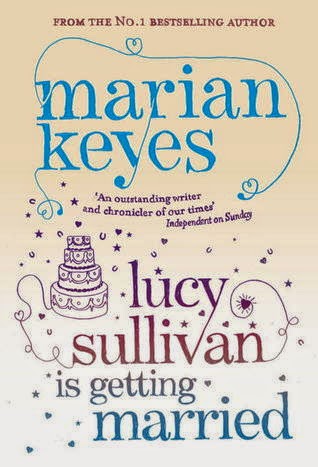
Dated but Decent - Lucy Sullivan is Getting Married by Marian Keyes

As I believe I've mentioned, I have an ARC of Marian Keyes' new book, The Woman Who Stole My Life, but because it's not out until Novemeber, other ARCs are getting read first. In preparation, I decided to reaquaint myself with whatever the Library had of Keyes' older novels: Lucy Sullivan is Getting Married is Keyes' second book, first published in 1995.

Lucy Sullivan is what would later become the typical Chick Lit heroine - 20 something, office job, boyfriend woes; likes drinking, fashion and shoes; her friends (and frenemies) play a large part in the book. It's worth remembering this was published the year before Bridget Jones' Diary and three years before Sex And The City first broadcast.

When Lucy and her colleagues visit a fortune teller, Mrs Nolan, Lucy is told she'll be married within the year. After the others' fortunes appear to come true - Meredia coming into the princely sum of £7.50, and Meghan suffering a massive split ... to her lip - Lucy is ready to believe it, especially when she meets charming, handsome, unreliable Gus.

Everything which came later in the genre would have you believe this is your typical cheesy romance, that Lucy muddles her way through trying to find Mr Right until she finally finds him in an unexpected place, but this is Marian Keyes, and Marian Keyes - like myself - always has one eye on the realm of mental illness and its associated issues. When Lucy sees Mrs Nolan, Mrs Nolan sees somebody with a great darkness in them, and this is a large part of why Lucy - sufferer of Depression since her teens - is convinced Mrs Nolan is the real deal.

Initially, the book is slow. Lucy spends an inordinate amount of time cringing, feeling embarrassed, apologising, feeling worthless, and generally being fairly annoying. She is, in many respects, a doormat. She's also immature: her relationship with her Mammy (which I initially disliked, I will freely admit, because it reminded me so much of Strider's relationship with our Mammy) left me wanting to tell her to grow up and stop being so petulant.

But, at 2/3rds in things take a change and every annoying, petulant utterance Lucy has made in the preceding pages slots neatly into place. She's no longer somebody you wish would grow a backbone and stop putting up with so much crap from so many different quarters - well, she *is* - but somebody who has behaved the way that particular person would behave. Marian Keyes knows her stuff. There may be jokes, and ridiculous characters, but there are still punches and more fidelity than the fluffy pink cover would have you expect.

Although the bones of the story stand up pretty well for its age, the are some major aspects which don't. Lucy's situation, for instance - her flat on her job is a pipe dream these days, as is the ability to sit doing nothing all day without being fired. It suffers what I shall christen 70's Sitcom Syndrome: there are some lines which make for uncomfortable reading in this modern and enlightened age - a male character calls a woman a dyke because she hasn't succumbed to his charms, for instance. Some of the banter between the characters, male and female, is viscous rather than amusing - Lucy's relationship with her flatmates is a great example. Lucy and Gus's interactions - again, Lucy is a doormat and the reason for it is there, but I think the current generation of 20-somethings will have less in common with this character than her contemporaries did, and perhaps have a more difficult time grasping the (unmentioned) fact that Mental Health was talked about even less in those days.

The most damning matter for me was Gus. He is a knobhead. From the second Lucy meets him, he is a knobhead, and because Lucy is such a doormat I would forgive anybody who flung this across the room in irritation and went and found a book about somebody with an ounce of self-respect.

In the end, I did like it, but for a fairly large portion of the book I didn't. The payoff was worth it to me, but if you're under 30 and you don't have an interest in books which deal with Depression and its associated Jazz, there's not a great deal here. Even if you do fulfil those requirements, it remains something of a curio best left for Keyes' fans. Three star books do what I expected them too which this didn't, but in the end did.


Monday, 25 August 2014

See? This is how it should be done - Lamb by Bonnie Nadzam

During those times I'm not sick of the sound of my own voice, I can be heard proclaiming "If something is X, it has to *BE* X." Bonnie Nadzam is an author who understands this and I salute her for it. The pacing of Lamb's (character) reveal is done brilliantly and although I had criticisms at first, the character paid off. There are moments where credibility should be stretched, but it works for me because the characters have fidelity.

That said, I did have a few problems with this. Although ostensibly written in omni, little is made of it and it feels like a convenience for those few moments it *is* made use of. I also feel - because it's omni - a greater sense of the long term picture could have been given, rather than the brief paragraph we get. Dave Lamb *is* X, so there's going to be more than just this story.

I was also mention I was surprised to see another reviewer describe this as a love story if we think out of the box. It isn't. It really, really, isn't. It is, however, a great one to give to your teenage daughter, along with a highlighter pen.

This is a really well written and intelligent book which deserved its Women's Prize for Fiction Longlisting although it's definitely not one for everybody: four stars.


Thursday, 31 July 2014

Quietly Insidious - Her by Harriet Lane

Her, Harriet Lane's second book is, like her debut Alys, Always, a literary psychological thriller. If you're wondering what that means, it means the thrills and the tension are ratcheted so tight as to be invisible and the horror cloaked in the everyday language of the mundane.

It also means I happen to like it. Very much so.

Emma is your everyday middle-class London mum - she has a young son, is pregnant with her second child, and she's struggling with the standard problems of that demographic.

Nina is an artist with a late-teenaged daughter; she remembers Emma, and what Emma did.

Alternating between the two characters, the reader is given Emma's story, that of domestic worries and mislaid items, of a new friend whose confidence and sophistication Emma wishes she could emulate; and Nina's story, that of long-held anger and opportunities engineered.

Her is a tremendously quiet book and it's there its power lies. The way Nina sidles her way into Emma's life, and the almost-desperation with which she is greeted, is harrowing in its simplicity. The domestic scene provides a set-up rich with potential. The most terrifying things are those we believe can happen: it's why I've never been scared by Stephen King but still think of The Handmaid's Tale with dread. Lane exploits the everyday and in Nina writes a character whose terror lies in the ease with which she manipulates Emma, and the utter relentless normality.

Which leads me to my complaint - I'm honestly not sure if I think the grand reveal is brilliant or hopeless. On the one hand it's chilling, deftly giving us the measure of Nina to set up the final scenes (oh! the details! those tiny, tiny details!); on the other, it's mundane and pointless (but that is *why* it works).

Pushed, I come down on the side of brilliant, but those expecting a psychological thriller with a dramatic endgame or similar will likely find this is not the book for them. In a world which appears to be swimming with domestic psych thrillers, Lane is an easy author to pass over for the more obvious terrors of The Silent Wife, or Into The Darkest Corner, but anybody who found those rather too packed with melodrama, Her should be your next book. 4 stars.


Friday, 18 July 2014

Well ... it tried - Night Film by Marisha Pessl

At any given time I have 86 bajillion things to do, which means much of what I'm trying to do gets shunted to one side while I deal with those things actively on fire.

I meant to write a review of Night Film when I read it but time and Chrismas have conspired to push it onto my "No, I'll definitely do it *this* week" list - that is, the tasks which are penciled in for April. So it is this review has ended up not being written until now, when I'm merely supposed to be making doctors appointments and cleaning the oven as opposed to anything of vital importance.

Because of this, it's going to be slightly vague and I can't double check things because the book has gone back to the library, but I do have things to say, hence the review.

Those things are, basically, that Night Film wants to be a spooky, psychological thriller, but spooky psychological thrillers only work if the reader is carried with them. Night Film trips itself up, badly, and beneath the effort and the "scan these things with your phone and you can watch a video on the interwebs!" is a book which doesn't manage to be much more than "fine".

I have complaints, in particular that at times it feels the author hasn't thought the details through properly. It's a pet hate of mine anyway but it's also a big deal in a book which is trying to make you guess what is and isn't real. In this instance, a character is remembered as taking pictures with a Leica which is fine, except the character in question lacks a thumb, index and middle finger (which on an SLR you need to support the lens and adjust the focus). Yes, I'm really that anal.

I found the characters weakly done. Nora, who helps Scott investigate due to totally legitimate reasons which would absolutely happen in real life, is particularly desperate. Ashley, whose suicide protagonist Scott is trying to investigate, is irritating despite spending all but the prologue being dead. Every single sodding person the investigation leads them to (and there are quite a number) goes on and ON about how amazing she was, and how she had this way of LOOKING at you. It almost got away with it, prompting sarcastic asides rather than a fully blown book fling, but set in the context of the resolved story it's an especially low point.

Initially I thought Night Film was going to be like the readable bits in House of Leaves (I'm dyslexic. Me and the footnote have a tortured history), and I would have settled for something reasonably intelligent, but it's neither of those things.

There are some good parts - a sequence towards the end of the book is particularly good and exactly the kind of thing I wanted to see from the rest of it - but they are rather derivative if you know your directors.

It's readable enough and because I like that it's trying to do something even though it fails, I'm going to give it three stars.


Wednesday, 16 July 2014

Self-indulgent - How Should a Person Be by Sheila Heti

I've never seen Girls, that TV show everybody seems terribly keen on, but from time to time I read articles criticising it for being about Privileged White Girls. How Should A Person Be? by Sheila Heti made me think of every criticism I've ever read levelled at that TV show which I haven't seen.

I didn't like it. I didn't find it funny. It wasn't just that it had nothing to say to me - which it didn't, but that hasn't always mattered in the past with other books - but what it did say seemed so self-involved. Self-involvement is not an inherently bad thing, but this one just didn't do it for me at all. It's not even a case of disliking the "main character", it's more that I'm busy and I don't have much time for this "Will I matter?", "I want to be important!" navel-gazing, particularly when it's pretty much non-fiction.

Maybe it's a cultural thing. Maybe this just doesn't translate well to a Brit. Maybe, as a creator of art, I have limited patience for people worrying about creating art (because you do it or you don't do it and believe me that you are the only person who cares either way). Maybe it's because people who want to be artists (rather than people who want to make art) make me gripe.

Or maybe, as somebody who considers it a life well lived if you make it to the end with most of the limbs you started out with, I was never going to care about a book wholly concerned with creating problems for oneself.

One star.